Motors and Controllers Laboratory

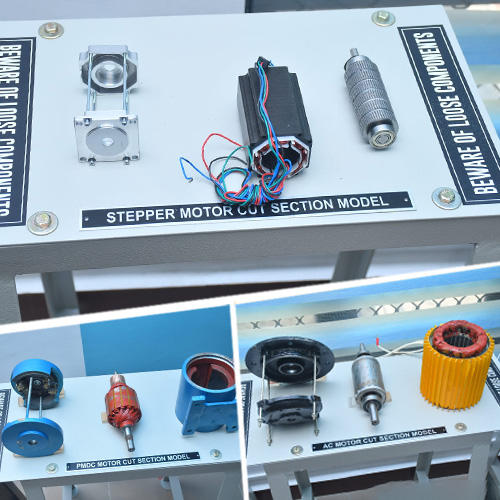
Cut Section Analysis of AC and DC Motors

Our Laboratory is equipped for an in-depth examination and analysis of various motor types, including DC, Stepper, BLDC (Brushless DC), PMSM (Permanent Magnet Synchronous Motor), and SRM (Switched Reluctance Motor). This state-of-the-art facility allows for a comprehensive study of internal motor components and structures.
Detailed Internal Examination

Utilizing cut section models, we provide a clear view of the construction of various motors, enabling a thorough understanding of their operational mechanics.

Component Identification

Our analysis facilitates the identification and labeling of key components within each motor type, enhancing knowledge of their functionalities and interrelations.

Comparative Structural Analysis

We conduct comparative studies of the internal structures of different motor types, highlighting their unique characteristics and performance advantages.

Material Composition Assessment

Understanding the materials used in motor components is crucial. Our Laboratory examines various materials, focusing on their properties and their impact on performance and durability.

Electromagnetic Field Analysis

We explore how electromagnetic fields are generated within motors and how they interact with different components, shedding light on essential electromagnetic principles.

Wear and Stress Evaluation

Our analysis includes identifying areas within the motor that may be susceptible to wear, stress, or failure, providing insights into maintenance and longevity.

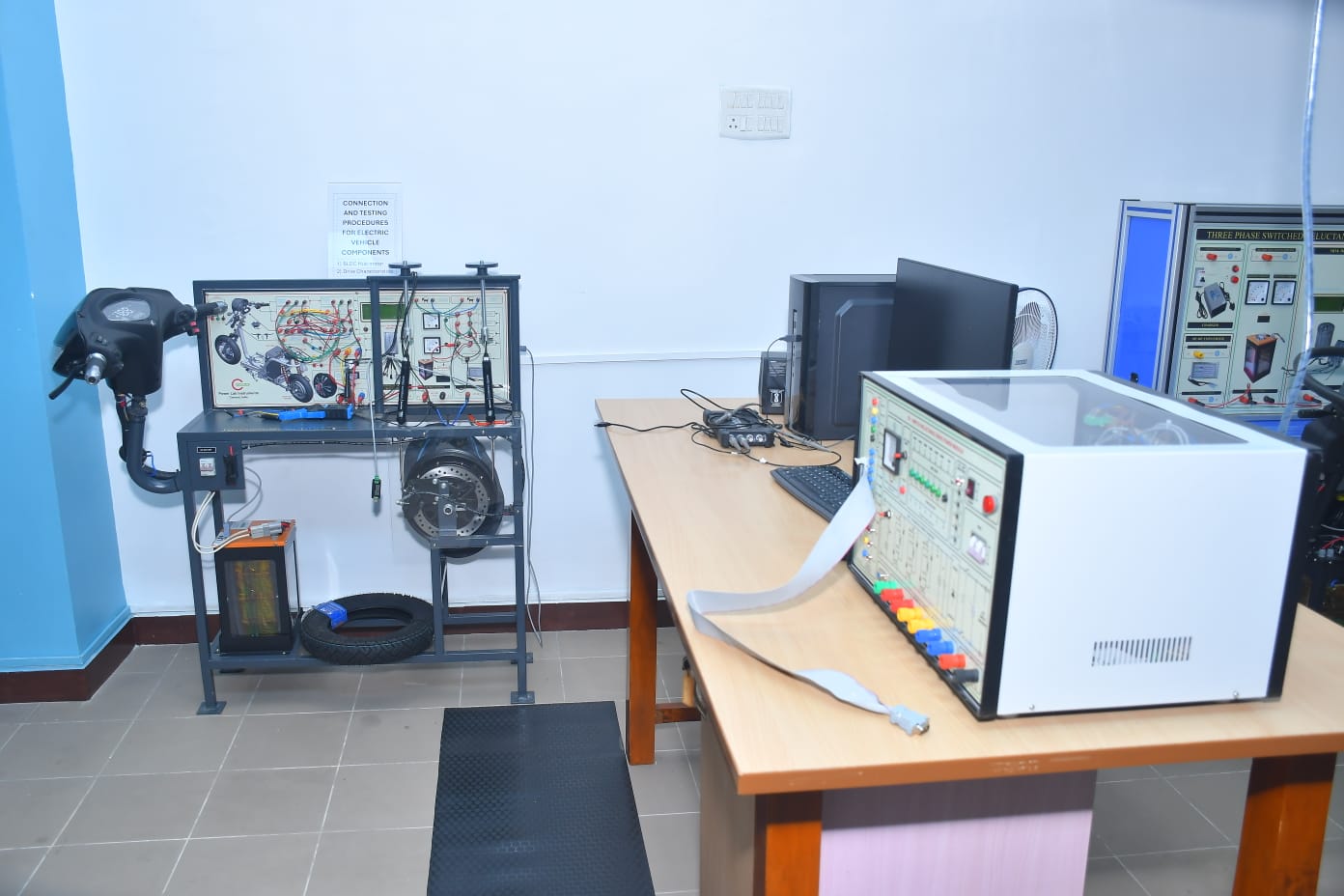
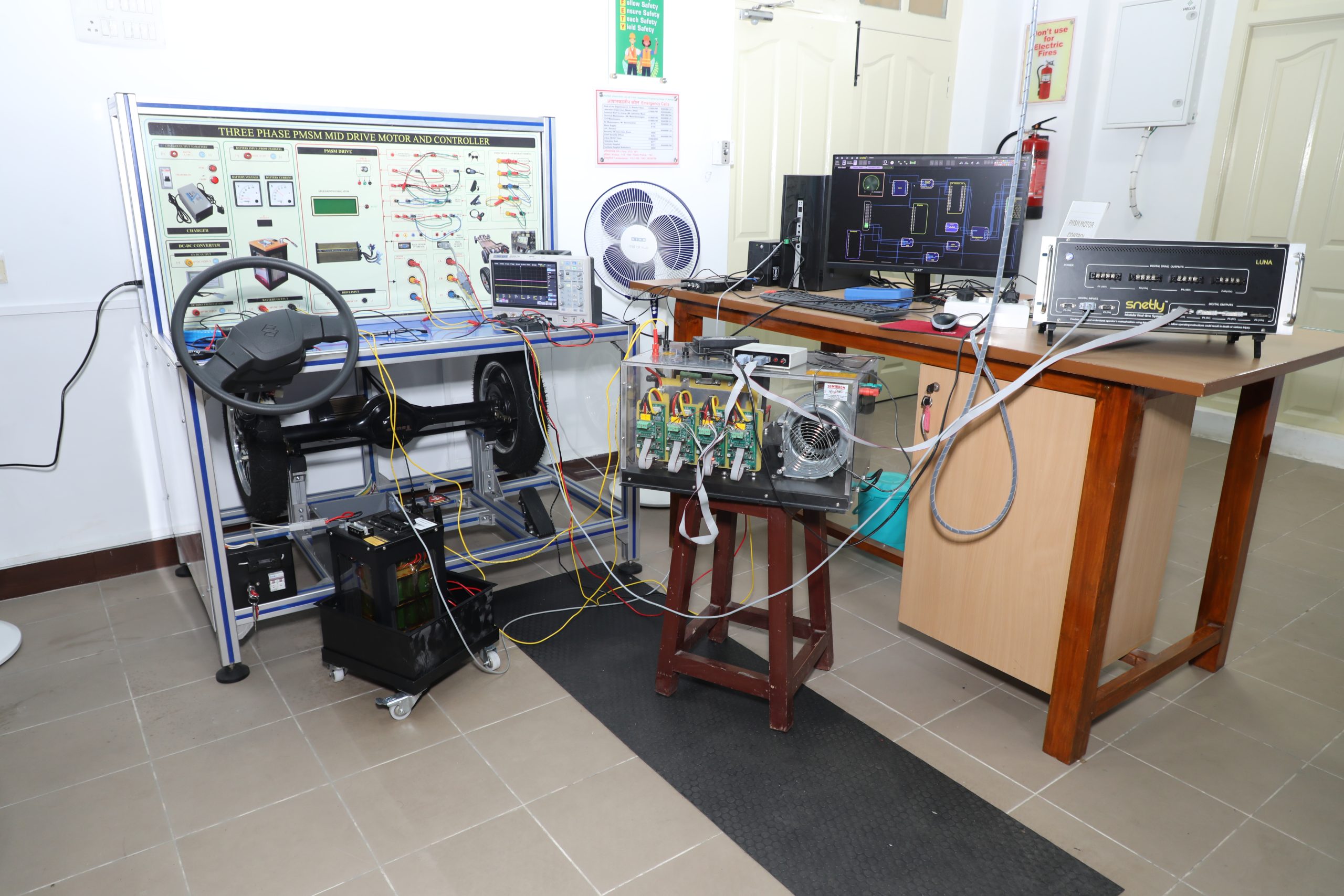
Speed Control & Drive Characteristics of Differentially Mounted PMSM/SRM Motors Using EV Power Train Control Panel

Our Laboratory offers a comprehensive setup for analysing the speed control and drive characteristics of differentially mounted Permanent Magnet Synchronous Motors (PMSM) and Switched Reluctance Motors (SRM) within electric vehicle (EV) powertrains. This facility is designed to enhance understanding of motor performance in real-world applications.

EV Power Train Component Functionalities

Explore the essential components of three- and four-wheeler EV powertrains, understanding how each element contributes to overall performance and efficiency.

Precision Measurement Capabilities

Our control panel includes advanced measurement tools for:
  • Voltage Measurement: Monitor voltage levels to ensure optimal operation and efficiency.
  • Current Measurement: Assess current draw to evaluate motor performance and identify potential issues.
  • Motor Speed Measurement: Accurately measure motor speed to analyze response and control strategies.

Differential Mounting Analysis

Investigate the implications of differentially mounting PMSM and SRM motors on wheel speed. This feature allows for a deeper understanding of how mounting configurations affect torque delivery and vehicle handling.

Battery Management System (BMS) Understanding

Gain insights into the operation and importance of the Battery Management System in EVs. This includes monitoring battery health, state of charge, and overall system integration for improved efficiency and safety.

This equipment is crucial for researchers, engineers, and students aiming to delve into electric vehicle technologies, motor dynamics, and the interplay of powertrain components for enhanced performance and reliability.

Speed Control, Torque & Drive Characteristics of In-Wheel (Hub) BLDC Motors Using EV Power Train Control Panel

Our Laboratory is equipped with a setup for analyzing the speed control, torque, and drive characteristics of in-wheel (hub) Brushless DC (BLDC) motors within electric vehicle (EV) powertrains. This facility is essential for understanding the dynamics of modern two-wheeler electric vehicles.

EV Power Train Component Functionalities

Explore the critical components of two-wheeler EV powertrains, gaining insights into how each part works together to deliver optimal performance and efficiency.

Comprehensive Measurement Capabilities

  • Voltage Measurement: Monitor voltage levels to ensure efficient operation and diagnose potential issues.
  • Current Measurement: Analyze current consumption to assess motor performance and power distribution.
  • BLDC Motor Speed Measurement: Accurately measure the speed of BLDC motors to evaluate control strategies and responsiveness.

Load vs. Torque Characteristics

Conduct experiments to study the relationship between load and torque in in-wheel BLDC motors. This analysis is crucial for understanding how these motors perform under varying conditions and loads.

Battery Management System (BMS) Understanding

Gain a thorough understanding of the Battery Management System, including its role in monitoring battery health, state of charge, and ensuring safe and efficient operation of the electric powertrain.

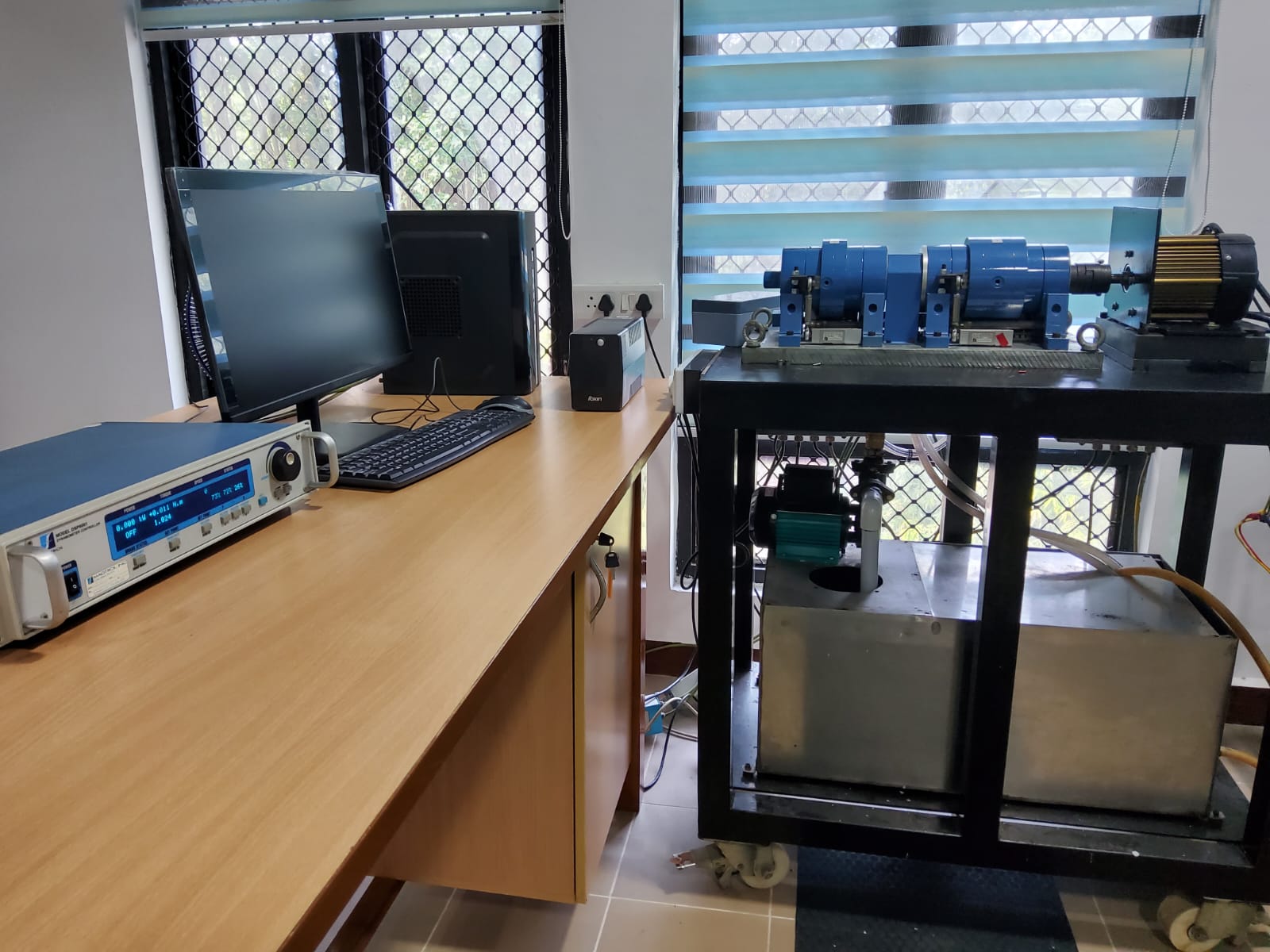
Torque Measurements Using MAGTROLL DSP6001 Tandem Dynamometer

Our Laboratory is equipped with the MAGTROLL DSP6001 Tandem Dynamometer, a state-of-the-art device designed for precise torque measurements in various motors. This equipment is essential for researchers and engineers looking to evaluate motor performance under diverse conditions.

Comprehensive Measurement Capabilities

The dynamometer allows for accurate measurement of speed, torque, and power output of motors, providing essential data for performance analysis.

Dynamic Torque Response Assessment

Analyze the dynamic torque response of the motor under test, including its behavior during transient conditions. This feature is critical for understanding how motors react to sudden changes in load or speed.

Load Condition Simulation

Simulate various load conditions to study their impact on torque output. This capability helps in evaluating motor efficiency and optimizing performance across a range of operational scenarios.

The MAGTROLL DSP6001 Tandem Dynamometer is a vital tool for advancing research in motor technology, allowing for detailed analysis and characterization of motor performance to support innovative designs and applications.

Control Strategy of Electric Motors Using Snetly FPGA

Our Laboratory is equipped to develop and implement advanced control strategies for various electric motors, including Brushless DC (BLDC), Switched Reluctance (SR), Permanent Magnet Synchronous Motors (PMSM), and Induction Motors. Utilizing the Snetly FPGA (Field Programmable Gate Array), we enable real-time control algorithms that enhance motor performance and efficiency.

Real-Time Control Algorithm Development

Design and implement sophisticated control algorithms tailored for different motor types. This capability allows for precise control of motor behavior in real-time applications.

Versatile Motor Support

Our setup supports a range of electric motors, including BLDC, SR, PMSM, and Induction Motors, providing flexibility in research and experimentation.

FPGA-Based Implementation

Leverage the power of Snetly FPGA to achieve high-speed processing and responsiveness in motor control. This technology enables the execution of complex algorithms with minimal latency.

Performance Optimization

Experiment with various control strategies to optimize motor performance, efficiency, and response under different operational conditions.

This equipment is essential for researchers and engineers focused on motor control technologies, enabling innovative solutions for electric drive systems across diverse applications.

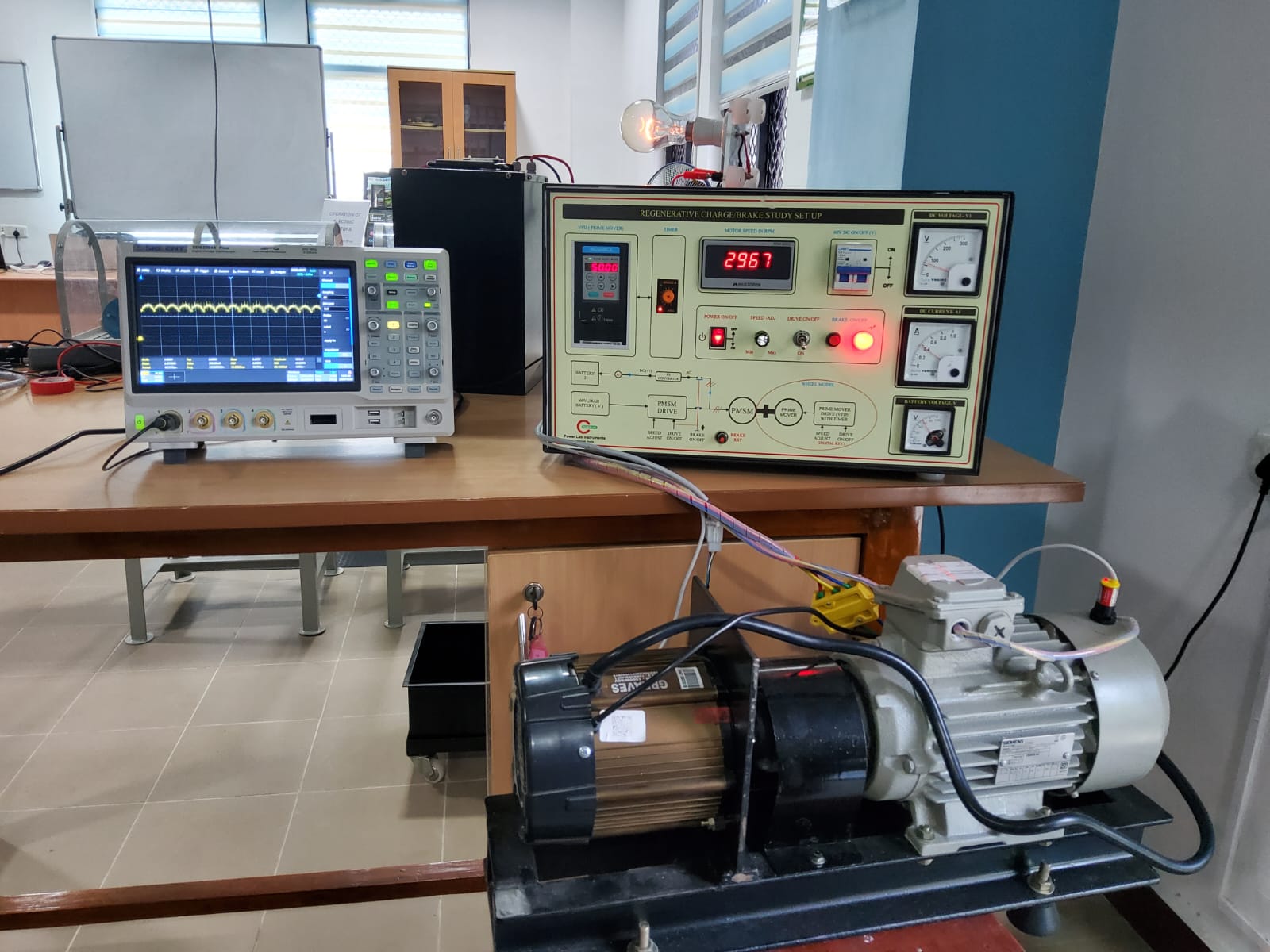
Study of Regenerative Braking System

Our Laboratory is equipped to conduct in-depth studies on regenerative braking systems, an essential technology for enhancing energy efficiency in electric and hybrid vehicles. This facility enables users to explore the principles and practical applications of regenerative braking.

Fundamental Principles Exploration

Gain a comprehensive understanding of the fundamental principles and mechanisms that underpin regenerative braking systems. This includes studying how kinetic energy is converted back into electrical energy during braking.

Simulated Braking Conditions

Conduct experiments to simulate various braking scenarios and downhill driving conditions. This allows for a thorough investigation of system behaviour and efficiency.

Voltage and Current Measurement

Measure the voltage and current generated during regenerative braking under controlled conditions. This data is crucial for assessing the effectiveness of the braking system and its impact on overall vehicle performance.

Address

ED 304, Department of Engineering Design, IIT Madras

Phone

044 2257 5617