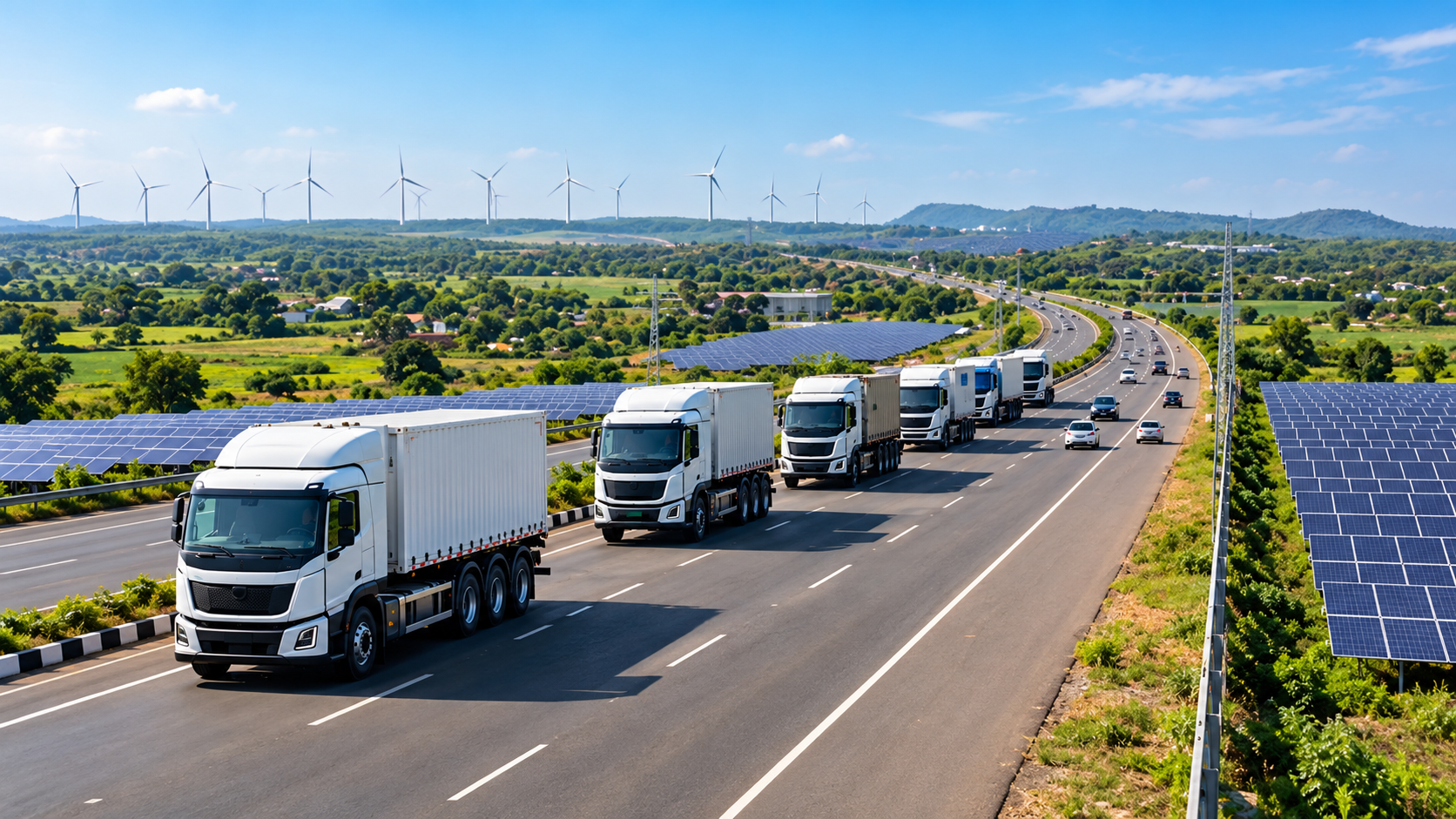
Bharat Zero Emission Trucking Policy Advisory

Understanding the Impact of
Zero-Emission Trucking (ZET) Charging Parks

Transitioning India's Freight Backbone

India stands at a critical juncture, balancing the demands of rapid economic expansion against the pressing imperatives of environmental sustainability and energy security. Despite making up only 3% of the nation's fleet, trucks handle 65% of the road freight, a sector projected to quadruple by 2050. If we remain tethered to fossil fuels, this growth will trigger a $1 trillion crude oil import bill and escalate the public health crisis caused by diesel emissions, which currently accounts for 53% of the total on-road particulate matter emissions.

Download Report
uicp Aadhaar System

In India, the urgency is acute. The national truck fleet is projected to surge from 4 million vehicles in 2022 to approximately 17 million by 2050. Without decisive intervention, the oil import bill attributable to road freight is projected to increase fourfold by 2050, posing a severe threat to national energy security and the environment. To mitigate this, dedicated "Charging Parks" (cps) are being deployed as the spatial and economic backbone of the Zero-Emission Trucking (ZET) transition.

Defining the ZET Charging Park: More Than Just a Power Station

A ZET Charging Park is not a simple utility point; it is a sophisticated spatial and economic intervention. These facilities are engineered to accommodate the unique physical and electrical demands of Heavy Commercial Vehicles (HCVs), moving beyond the standards of passenger vehicle charging.

Key Physical and Spatial Characteristics

Land Scale

Each park requires a significant footprint of 3 to 6 hectares to accommodate charging bays, substations, and maintenance zones.

Strategic Siting

Locations are prioritized along National or State Highways and near logistics hubs with direct arterial access.

Engineering for Heavy Loads

Infrastructure includes reinforced pavements for high axle loads and expanded turning radii for safe manoeuvring.

Environmental Constraints

TO manage hydrological risks and heat island effects, design standards mandate an impervious surface coverage limit of less than 70%, ensuring adequate drainage and groundwater infiltration.

The sector is currently navigating an "interim standard" phase using 200-300 kW chargers, but forward- looking grid planning is based on a 600 kW per-truck design basis. A representative park serving 50 trucks simultaneously requires a peak design load of approximately 30 MW (assuming all 50 trucks charge at 600 kW at the same time). These parks integrate into the existing driver lifestyle by mirroring traditional •way-side amenities" (Dhabas, rest areas), ensuring that physical infrastructure supports human needs.

Environmental Dividends: Cleaner Air and Energy Security

The strategic value of ZETS lies in reducing India's dependence on fossil fuel imports and improving localized health outcomes. Currently, road freight accounts for over 25% of India's annual oil import expenditure; displacing this fuel is essential for national security.

Electric truck charging infrastructure

The table below compares a "Business-with-Support" (BWS) scenario, in which policy support drives high ZET adoption (85% penetration) by 2050, with a Business-as-Usual (BAU) scenario:

Metric Impact of High Adoption (BWS) vs. Business-as-Usual (BAU)
CO2 Emissions
Potential 46% reduction relative to BAU
Diesel Consumption
Displacement of approximately 190.54 billion litres
National Security
Substantial reduction in oil import dependency and the associated national fuel import bill
Dependence on the Power Mix

Environmental gains aro not guaranteed; they are highly sensitive to the energy mix. Sensitivity analysis in the underlying assessment indicates that case I (low renewable share at 30%) results in a 22% reduction in C02 benefits compared to the base case. Thus, the •greenness' Of the fleet depends primarily on renewable energy integration.

The Socio-Economic Layer: Livelihoods and Community Impact

A "Just Transition" necessitates that infrastructure supports local communities rather than displacing them. ZET Charging Parks act as economic catalysts through the development of Ancillary Enterprises.

Rajasthan Case Study & Livelihoods

Field observations in Rajasthan illustrate that the longer "dwell times" required for electric charging (compared to diesel refuelling) boost local micro-businesses like Kirana (grocery) stores and repair shops. Crucially, these halts facilitate the movement of goods for nearby villages where public transport is limited, providing a vital link for rural accessibility.
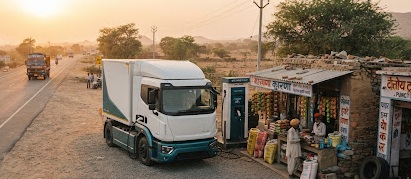
Electric freight truck alongside roadside shops in rural Rajasthan

Social Safeguards and Managed Risks

Charging Masters

Trained on-site staff who supervise charging operations, ensuring operational compliance and user safety.

Resource Pressure

Concentrated activity can strain local resources, such as water supply in borewell-dependent areas, requiring sustainable utility planning.

Workforce Transition

While the transition is expected to create new skilled jobs, there is a risk of job losses in fossil-fuel-linked segments. Impacts on informal-sector employment may be underrepresented in current assessments due to data gaps.

Gender Inclusion

Parks are to be designed to be safe and accessible for women and all workers, through measures such as adequate lighting, CCTV surveillance, and separate sanitation facilities.

Implementation Challenges: Grid Readiness and Financial Viability

The transition is currently in an "Emerging/Partial" state, as assessed under the Readiness Index of the underlying assessment (see Source below). Success requires a multidimensional approach to overcome systemic hurdles.

Electrical grid infrastructure and electric freight trucks at a charging facility

Readiness Index Granularity:

Policy & Regulatory

Moderate (evolving framework).

Financial Viability

Constrained due to high upfront capital expenditure (CAPEX), early-stage negative cash flows, and uncertain return on investment (ROI).

Infrastructure

Partial (site-specific feasibility for 30 MW loads).

Key Risk Factors (in order of priority):

1

Renewable Energy Configuration:  The top priority for ensuring net decarbonization.

2

Land-Use Intensity:  Managing the impervious surface ratio to prevent environmental stress.

3

Grid Capacity Margin:  Ensuring system reliability for 30 MW design loads.

4

Incentive Stability:  Maintaining schemes like PM E-DRIVE (purchase incentives of up to ₹9.6 lakh per e-truck, depending on gross vehicle weight, available until 31 March 2028 subject to fund availability) to offset initial capital barriers.

The Roadmap to 2070

ZET Charging Parks are the indispensable backbone of a sustainable freight ecosystem, evolving from simple fuel stops into high-tech, inclusive infrastructure hubs.

Path Forward:

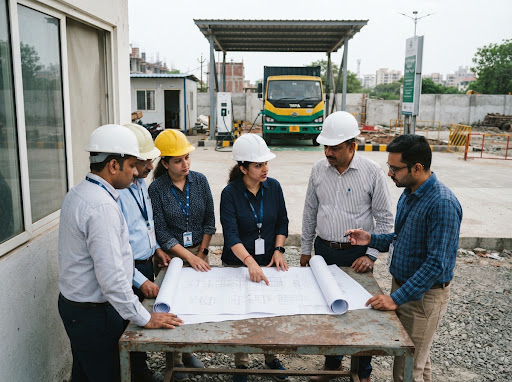
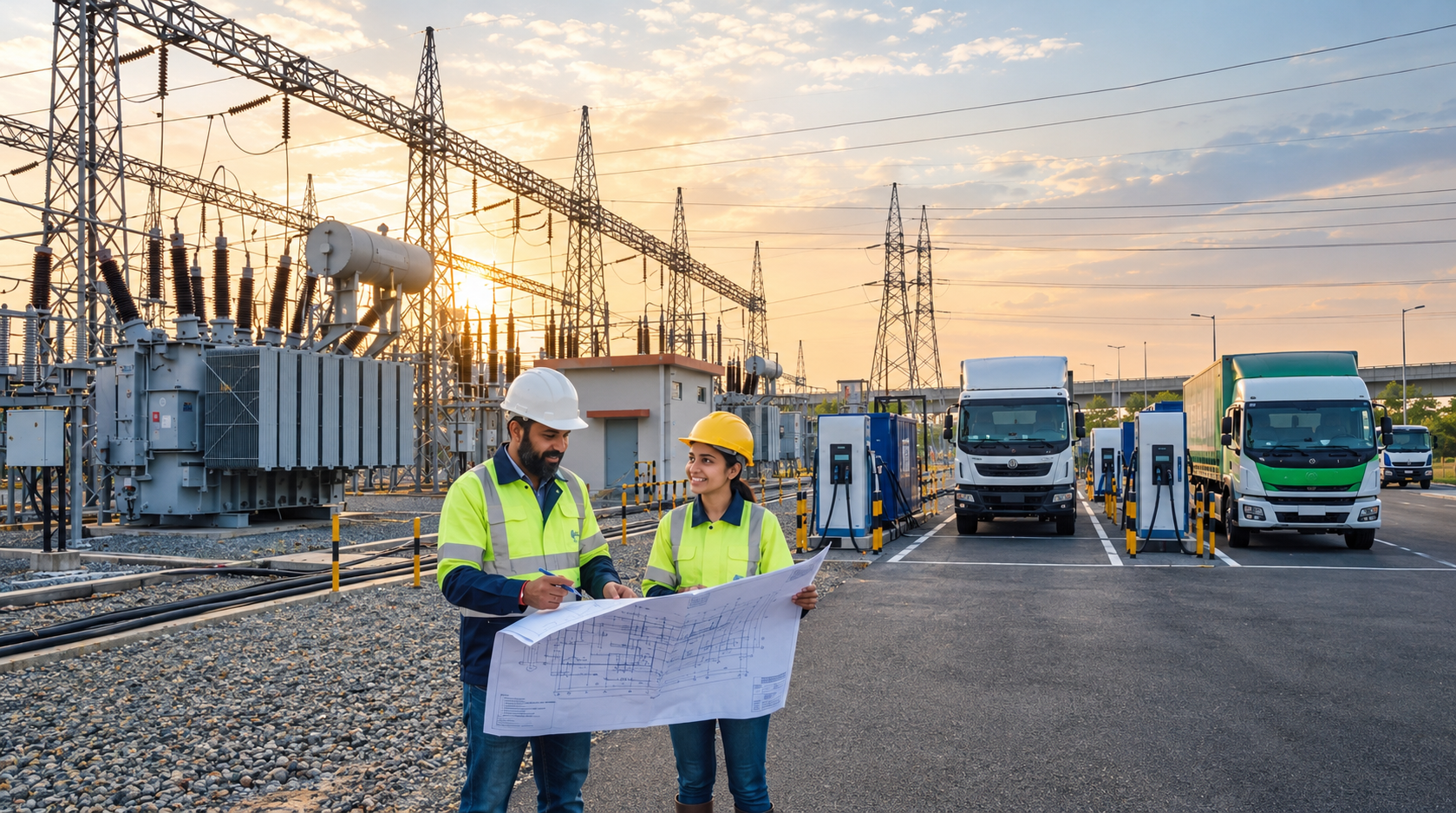
Team reviewing plans for electric freight charging infrastructure

Short-term

Regulatory alignment, streamlining approvals from the Chief Electrical Inspector to Government (CEIG), and launching pilot interventions in high-priority zones.

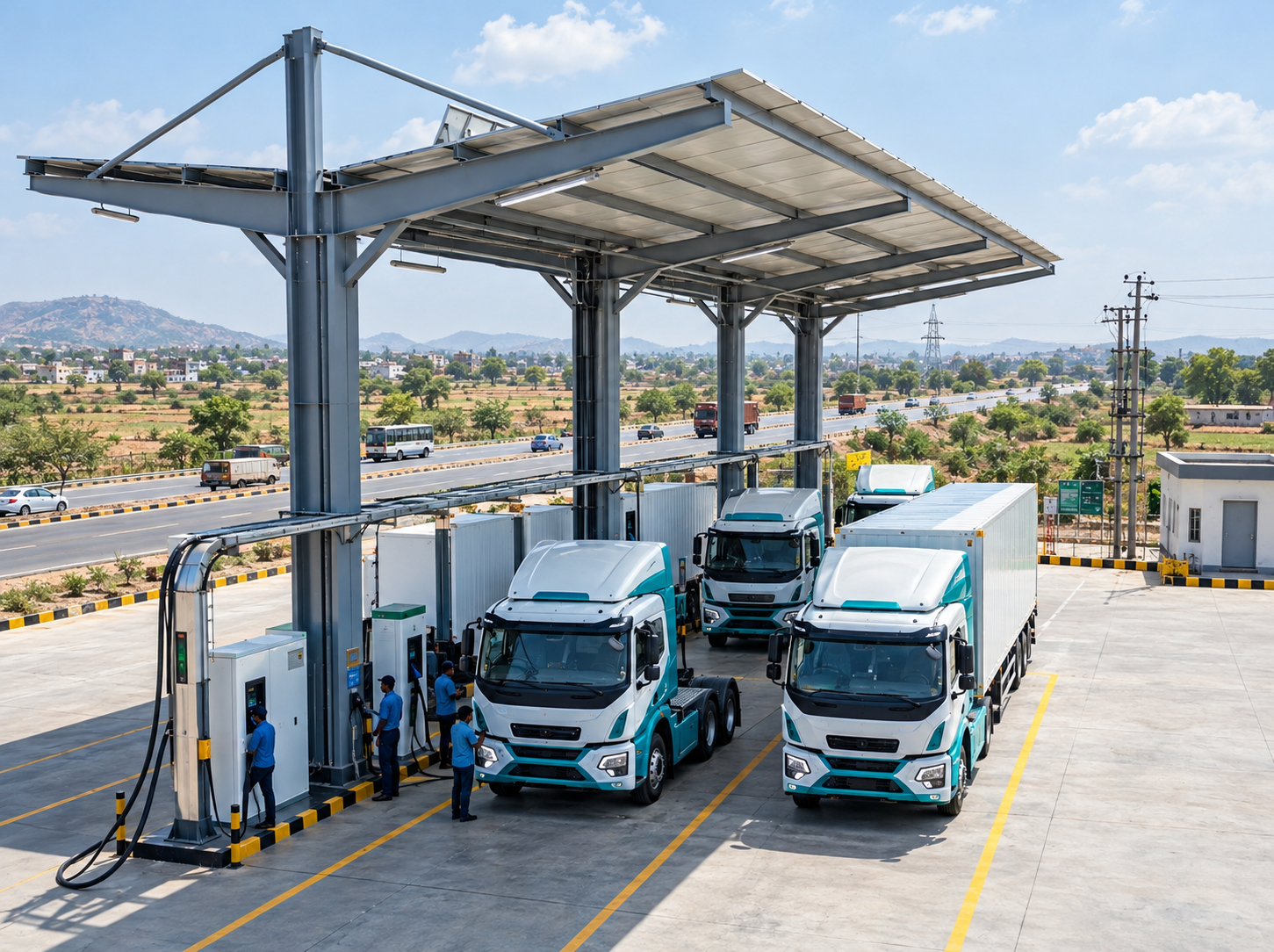
Electric freight trucks charging beneath a solar canopy

Middle-term

Scaling through anchor fleet adoption and standardized high-capacity (600 kW) charging along major corridors.

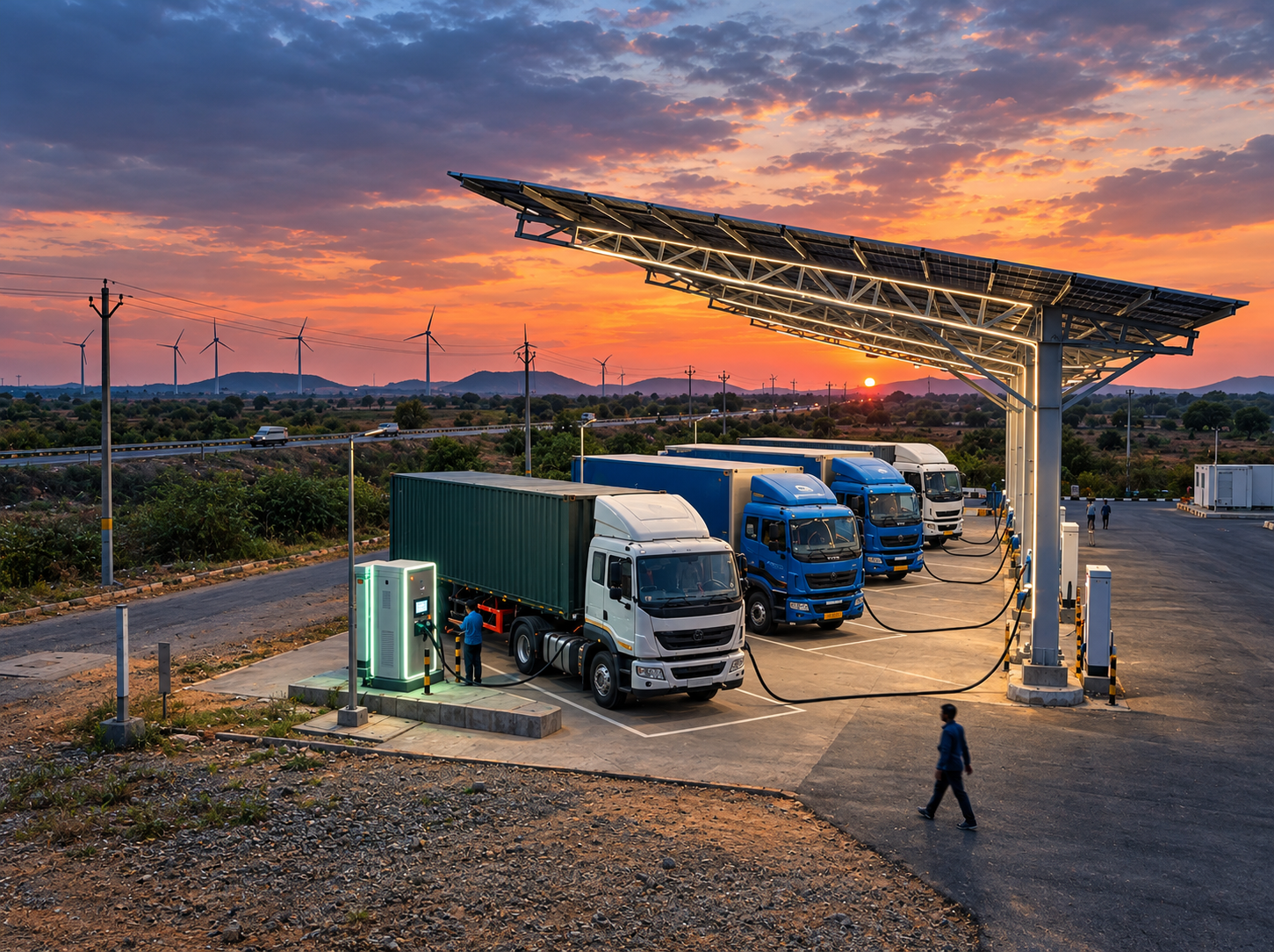
Electric freight trucks at a renewable-energy-powered charging park at sunset

Long-term

Full renewable integration and a resilient, inclusive ZET ecosystem that substantially reduces the freight sector's dependence on fossil fuels.

By addressing these phases with precision, India can prove that industrial growth and environmental stewardship move in tandem, establishing a global model for freight decarbonization.