
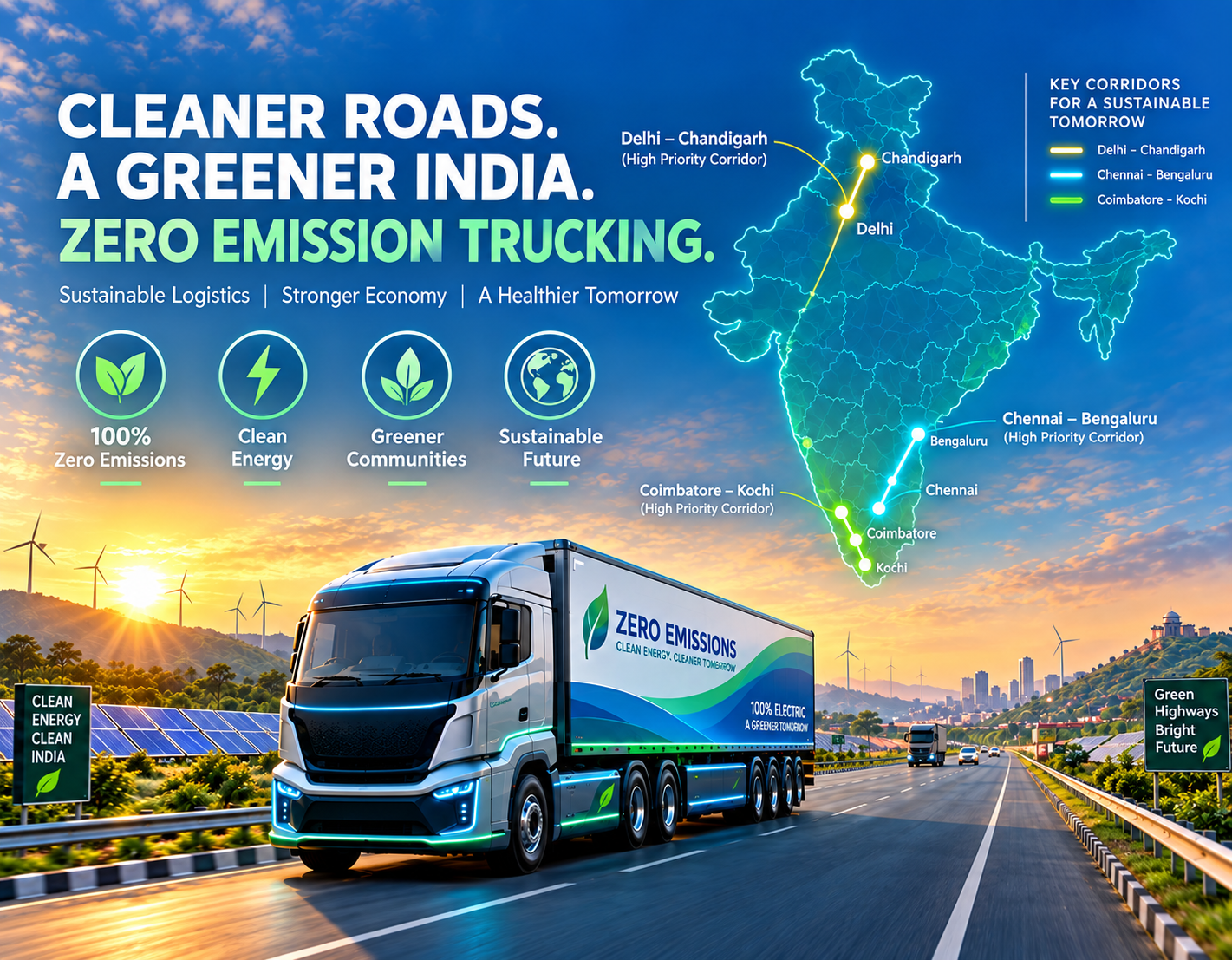
The trucking sector is the indisputable backbone of the Indian economy. It powers industrialization, enables the rapid rise of e-commerce, and supports millions of livelihoods by ensuring the seamless movement of goods across the nation. However, as India continues its trajectory toward becoming a global economic powerhouse, the sector faces a defining duality: it is both an engine of growth and a major contributor to greenhouse gas emissions. This presents a unique opportunity to reimagine freight movement as a system that is not only efficient and reliable but also clean and future-ready.
Recognizing this, the Office of the Principal Scientific Adviser (PSA) to the Government of India has released a strategic report called “ India's Priority Corridors for Zero Emission Trucking” to identify high-impact corridors for the deployment of ZETs. By focusing on specific highway segments, India can transition toward a model of sustainable transport that aligns economic ambition with environmental stewardship. This report serves as a blueprint for a technological shift that is as much an economic necessity as it is an environmental imperative, signaling the transition to an era of clean, heavy-duty logistics.
The strategic importance of decarbonizing India’s transport sector is driven by the duality of the sector’s growth versus its environmental impact. Currently, the trucking fleet represents a mere 3% of all vehicles on Indian roads, yet it is responsible for a disproportionate 34% of CO2 emissions and 53% of particulate matter (PM) emissions. As India continues to urbanize, the truck fleet is projected to quadruple to roughly 17 million trucks by 2050. Continuing with a diesel-dependent fleet under this demand would lead to unsustainable pollution levels and extreme energy insecurity. The transition to electric trucks offers five core benefits that extend beyond carbon reduction. Beyond improving public health, the adoption of ZETs will significantly lower the cost of doing business. The following table summarizes the multifaceted benefits of transport decarbonisation:
| Benefit Category | Strategic Impact & Key Data Points |
|---|---|
| Emissions & Air Quality | Eliminates tailpipe emissions; projected to reduce CO2 by 2.8 – 3.8 gigatons and PM/NOx by >40% by 2050. |
| Logistics Costs | Potential 17% reduction in lifetime costs compared to internal combustion engines due to lower fuel and maintenance expenses. |
| Energy Security | Displaces an estimated 993 billion litres of diesel, resulting in savings of ₹16 lakh crore by 2050 from reduced oil imports. |
| Industrial Leadership | Drives domestic demand for 4,000 GWh of battery capacity, positioning India as a global manufacturing and ZET hub. |
| Public Health | Significant reduction in respiratory-related illnesses for drivers and communities living near high-traffic corridors. |
These benefits demonstrate that the move toward zero-emission vehicles is a foundational step for India’s competitiveness. However, realizing these gains requires more than vehicle availability; it necessitates a structured geographical strategy to overcome infrastructure barriers.
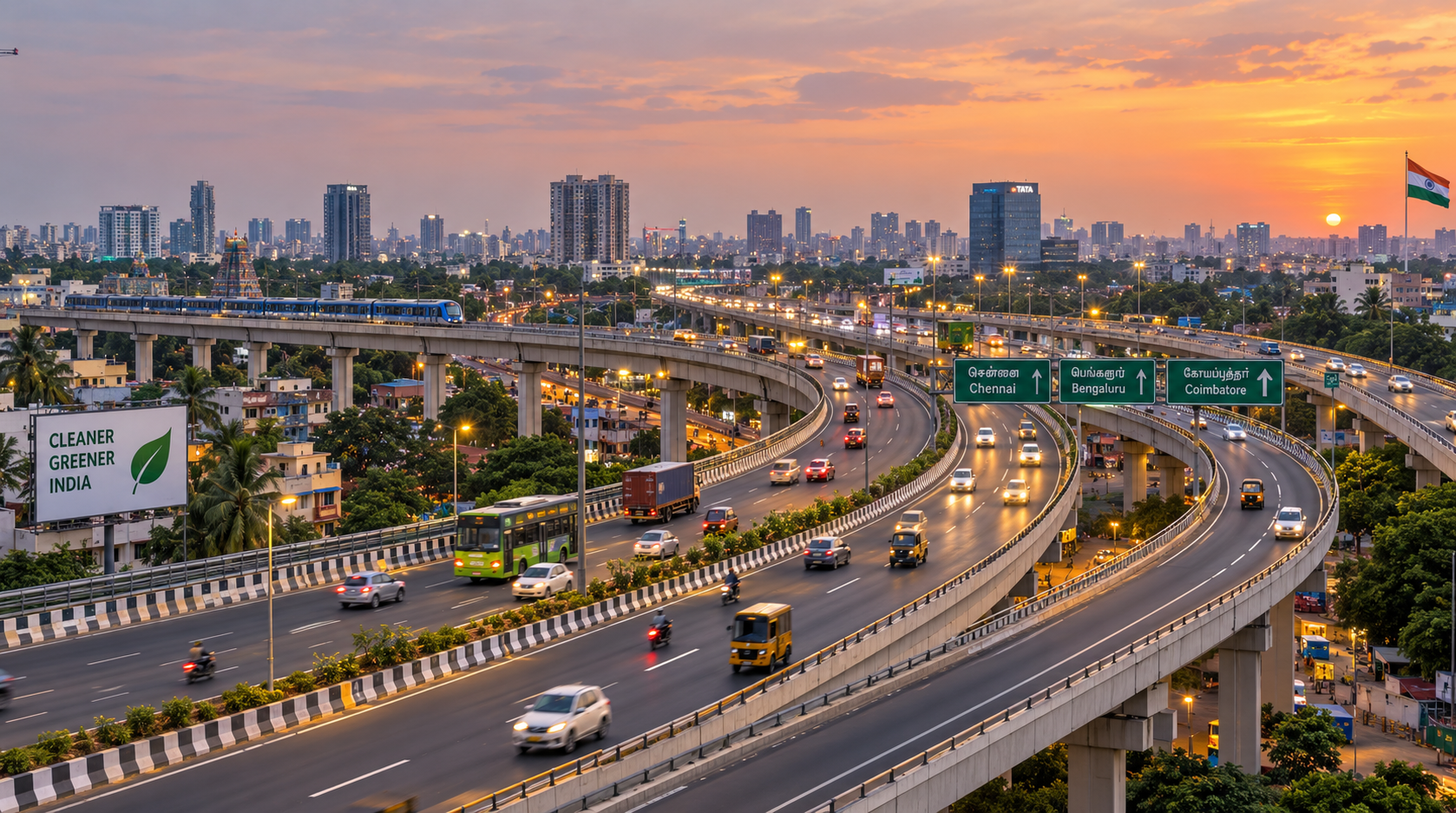
The primary lever for achieving zero-emission trucking at scale is the development of "ZET corridors." These are defined as highway segments strategically equipped with the necessary charging and refueling infrastructure to facilitate long-distance freight movement. This approach solves the "chicken-and-egg" problem where operators hesitate to buy trucks without chargers, and providers hesitate to build chargers without trucks by concentrating demand in high-traffic areas.
High-traffic routes ensure high utilization rates for charging point operators (CPOs), making infrastructure projects bankable and attracting private capital.
Corridors act as real-world laboratories for fleet operators to evaluate the operational and financial viability of electric freight trucks under diverse loading conditions.
Clear corridor identification allows DISCOMs (Distribution Companies) and TRANSCOs (Transmission Companies) to predict grid loads and implement a phased approach to power allocation and fund management.
Selecting priority corridors in a country as diverse as India requires a scientific, multi-layered approach. The selection process was governed by the framework “Technical Roadmap for Deployment of ZET” published by the Office of PSA and executed in three distinct phases:
An initial pool of 230 corridors was identified based on traffic volume. This was first narrowed to 103 consolidated corridors by merging spatial overlaps. These were then prioritized using a "Toll Index", defined as the number of truck-related toll transactions divided by the corridor length. Corridors with a toll index below 700 were excluded. Combined with satellite imagery analysis and proximity to Multimodal Logistics Parks (MMLPs), this phase resulted in 50 prioritized corridors.
An Industry Roundtable engaged OEMs and fleet operators to evaluate these 50 corridors based on "ZET-readiness," including policy favorability and industrial growth, further narrowing the list to 24.
The final stage involved primary research through driver and operator surveys along the 24 corridors. Secondary geospatial data regarding the proximity of power lines and substations was analyzed to arrive at the final top 10 corridors.
This rigorous filtering ensures that the final selection represents the most "ZET-ready" regions of India, where the probability of successful pilot programs is highest.
The identified corridors serve as blueprints for the future of green logistics in India. These routes were verified through rigorous "highway gradient analysis" to ensure they lack significant elevation gains over short stretches, making them technologically feasible without requiring excessive battery capacity.
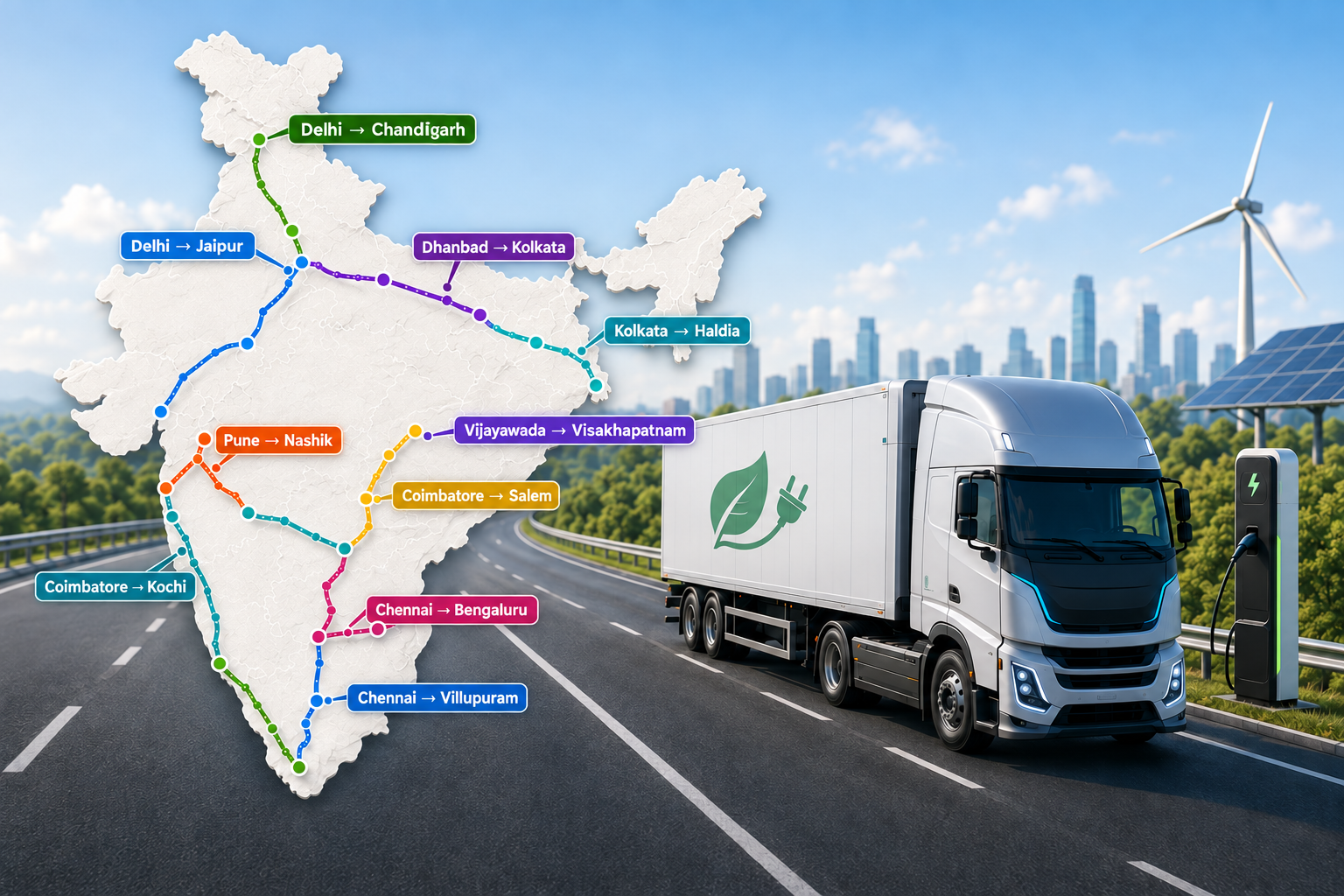
The Southern region accounts for 50% of the top 10 corridors. Analyst insights suggest this is due to high traffic volume, active industrial growth, and a higher prevalence of regular round-trip use cases that are ideal for early-stage electric vehicles. These segments provide the scale necessary to prove the techno-economic viability of clean heavy-duty transport.
| # | Corridor Route | Region | Length | Distance Scale |
|---|---|---|---|---|
| 01 | Chennai → Villupuram | South | 164 km | |
| 02 | Delhi → Jaipur | North | 276 km | |
| 03 | Vijayawada → Visakhapatnam | South | 320 km | |
| 04 | Chennai → Bengaluru Longest | South | 347 km | |
| 05 | Coimbatore → Kochi | South | 187 km | |
| 06 | Coimbatore → Salem | South | 169 km | |
| 07 | Kolkata → Haldia Shortest | East | 122 km | |
| 08 | Delhi → Chandigarh | North | 255 km | |
| 09 | Dhanbad → Kolkata | East | 273 km | |
| 10 | Pune → Nashik | West | 215 km |
The transition to ZET has received a vital boost from the Prime Minister Electric Drive Revolution in Innovative Vehicle Enhancement (PM E-DRIVE) scheme, which has allocated ₹500 crore to accelerate the uptake of electric trucks. This funding acts as a critical catalyst for achieving net-zero transport. The next steps involve the development of corridor-specific pilot cases and detailed business plans. These plans will include infrastructure cash flow analyses to demonstrate operational viability to private investors. Eventually, these 10 corridors will integrate into major national highway networks, such as the Golden Quadrilateral, creating a seamless, zero-emission freight web. India stands at a pivotal moment. By systematically addressing the challenges of infrastructure and demand through these priority corridors, the nation is not just cleaning its air; it is building a resilient, competitive, and technologically advanced logistics ecosystem that can lead the global transition to clean transport.